
Biogas Flare Gas Monitoring for AD Plants
Specialist flare gas monitoring for anaerobic digestion and renewable gas applications

Over 45 Years in Operation

1000's of UK Installations

Supporting 100's of UK Sites





The Challenge: Monitoring Flare Gas in AD Plants
Flare systems are a critical safety and environmental component within anaerobic digestion (AD) plants. Whether operating continuously, during maintenance periods or as part of emergency gas handling, reliable flare gas monitoring is essential for both compliance and operational efficiency.
However, biogas flare applications create several measurement challenges:
- Wet and saturated gas streams
- Condensation and contamination
- Low pressure operation
- Highly variable methane concentrations
- Extremely low pilot flows combined with high emergency flare rates
- Fluctuating digester production
Traditional differential pressure technologies often struggle in these conditions, particularly at low flow rates or with contaminated gas streams.
Reliable measurement requires instrumentation specifically suited to biogas environments.
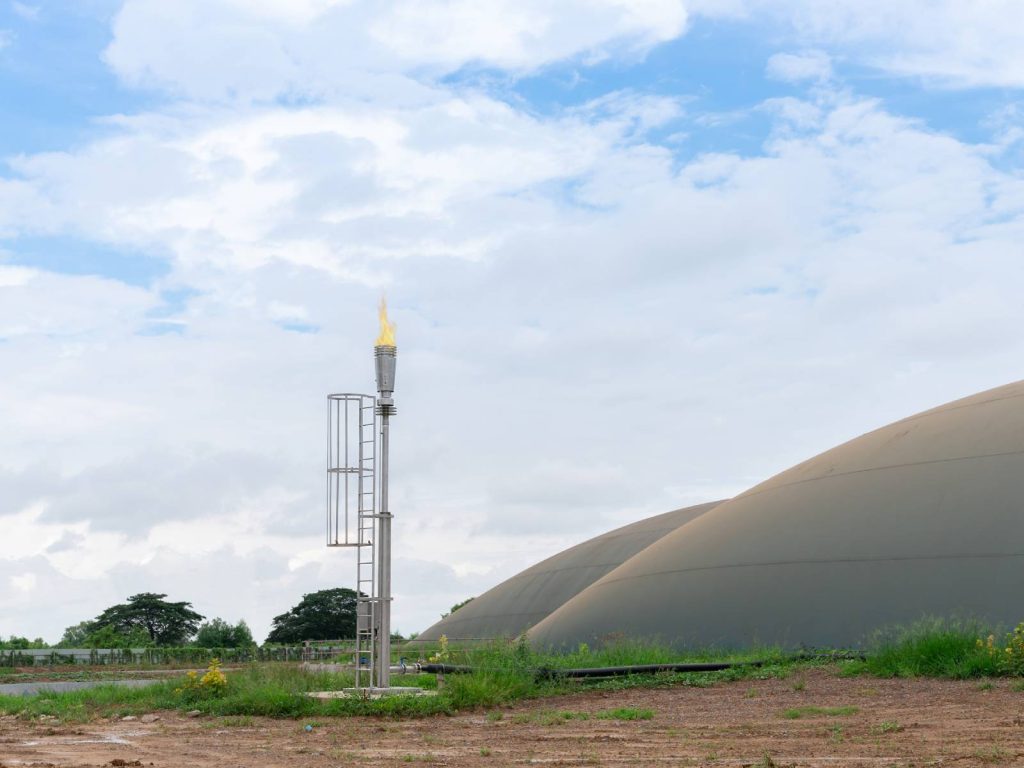
The Solution: Thermal Mass Flow Measurement for Biogas Flare Systems
Thermal mass flow meters have become one of the preferred technologies for biogas flare gas monitoring due to their ability to measure gas mass flow directly without requiring pressure or temperature compensation.
For anaerobic digestion plants, thermal technology offers major advantages:
- Excellent low-flow sensitivity for pilot gas monitoring
- High turndown capability for varying flare conditions
- No moving parts
- Minimal pressure drop
- Reliable operation in wet and dirty gas streams
- Direct mass flow measurement for improved reporting accuracy
This makes thermal mass flow technology particularly suitable for:
- AD plant flare stacks
- CHP bypass flares
- Emergency flare systems
- Digester gas vent monitoring
- Environmental emissions reporting
Why Biogas Flare Monitoring Is Different
Unlike refinery or industrial flare systems, anaerobic digestion flare gas is biologically generated and highly variable.
Gas composition can fluctuate significantly depending on:
- Feedstock changes
- Digester loading
- Biological activity
- Seasonal operating conditions
Biogas streams also contain:
- Moisture and condensate
- Hydrogen sulphide (H₂S)
- Siloxanes and contaminants
- Variable methane (CH₄) and carbon dioxide (CO₂) ratios
These conditions require flow meters capable of maintaining reliable performance despite unstable and contaminated process conditions.
Key Measurement Challenges in AD Plants
Wide Flow Range Requirements
Biogas flares often need to measure:
- Very low continuous pilot flows
- Normal operational venting
- Full emergency flare events
This requires high turndown performance and stable low-flow sensitivity.
Wet & Dirty Gas Conditions
Biogas is typically saturated with moisture which can create condensation within flare lines.
Thermal mass flow meters designed for biogas applications provide reliable operation in these challenging environments with minimal maintenance requirements.
Environmental & Compliance Monitoring
Reliable flare gas monitoring supports:
- Environmental reporting
- Methane emissions management
- Operational efficiency tracking
- Regulatory compliance
Recommended Technologies for AD Flare Monitoring
Thermal Mass Flow Meters
FCI thermal mass flow meters provide reliable measurement across highly variable biogas flare conditions.
Typical advantages include:
- Direct mass flow measurement
- Excellent low-flow sensitivity
- No moving parts
- Wide turndown capability
- Low maintenance operation
Suitable products include:
Supporting Process Technologies
Biogas flare monitoring systems are often integrated with:
- Biogas analysis systems
- Biological desulphurisation control
- CHP monitoring systems
- Gas-to-grid upgrading systems
- Thermal mass flow measurement across the plant
Typical Applications
- Anaerobic digestion plants
- Wastewater treatment biogas systems
- Agricultural digesters
- Food waste AD facilities
- CHP flare systems
- Biomethane upgrading plants
Our Experience in Biogas Applications
Allison Engineering has extensive experience supporting anaerobic digestion and renewable gas projects across the UK.
We provide:
- Flow meter specification
- Biogas flare monitoring systems
- Commissioning support
- Process optimisation
- Integration with wider biogas instrumentation systems
See also:
- Biogas Analysis for AD Plants
- Biological Desulphurisation for AD Plants
- Gas-to-Grid Upgrading
- Biogas Flow Measurement for AD Plants
- SIL Rated Oxygen Analysis for Biogas
Key Benefits
- Reliable monitoring in wet, contaminated biogas
- Accurate low-flow pilot monitoring
- High turndown for varying flare conditions
- Supports emissions and compliance reporting
- Low maintenance with no moving parts
- Suitable for challenging AD plant environments
Need information or advice?
Speak with our friendly, expert team to discuss your requirements and find out how we can help you.
Biogas Flare Gas Monitoring FAQs
Explore common questions about flare gas monitoring in anaerobic digestion plants, including measurement challenges, technology selection and compliance requirements.
Why is flare gas monitoring important in AD plants?
Flare gas monitoring provides essential data for emissions reporting, carbon accounting and regulatory compliance. It also helps operators understand how much gas is being lost through flaring, allowing them to optimise plant performance and improve efficiency.
What makes biogas flare gas difficult to measure?
Biogas flare gas is challenging due to its wide flow range, moisture content, low pressure and variable composition. Measurement systems must be capable of handling all of these factors while maintaining accuracy and reliability.
What is the best technology for biogas flare gas measurement?
Thermal mass flow meters are commonly used because they provide direct mass flow measurement, excellent low-flow sensitivity and reliable performance in wet and variable gas conditions. Ultrasonic meters may also be used in larger or higher-spec applications.
Can flare gas be measured at very low flow rates?
Yes. Thermal mass flow meters are particularly well suited to detecting low flows such as pilot gas or continuous venting, while also being capable of measuring high flow rates during upset conditions.
Our range of mass flow meters are currently supporting hundreds of biogas sites across the UK.
How do I ensure accurate flare gas measurement?
Accurate measurement depends on correct meter selection, proper installation (including straight pipe lengths and moisture management) and calibration matched to the gas composition. Ongoing maintenance and verification also support long-term performance.
Is flare gas monitoring required for compliance?
In many cases, yes. Operators are required to report emissions and flared gas volumes as part of environmental and carbon reporting frameworks. Accurate measurement is essential to meet these requirements.
Relevant Links

Why Trust Allison Engineering
We are committed to delivering the highest standards across the specialist areas we support, combining proven products with practical engineering knowledge and dependable service.
Need Help Monitoring Biogas Flare Gas?
Speak to our team to identify the right flare gas measurement solution for your application, ensuring accurate reporting, improved visibility and reliable long-term performance.